Complete Operation Guide for Hydraulic Pump Installation, Maintenance & Upkeep
Preface
As the "heart" of any hydraulic system, hydraulic pumps serve as the power source for hydraulic equipment. The service life, operating noise and output pressure stability of gear pumps, vane pumps, piston pumps and other hydraulic pumps all depend entirely on standardized installation and refined regular maintenance. Statistics on equipment failures show that over 90% of premature hydraulic pump damage stems from non-standard installation, insufficient maintenance and improper hydraulic oil selection.
This guide comprehensively covers standard hydraulic pump installation procedures, daily inspections, periodic maintenance, prohibited operations and simple fault diagnosis methods. Written in easy-to-understand language with strong practical operability, it caters to practitioners in machinery, machine tools, injection molding, metallurgy and other industries.
I. Standard Installation Specifications for Hydraulic Pumps
1. Installation Position & Oil Tank Layout Requirements
Low-position Installation (Recommended)Mount the hydraulic pump below the liquid level of the oil tank. The self-weight of hydraulic oil enables natural oil suction, fundamentally eliminating air cavitation, abnormal noise and suction starvation.
Restrictions for High-position InstallationIf the pump must be installed above the oil tank due to working conditions, the vertical suction height shall not exceed 800 mm. The suction pipeline shall extend at least 200 mm below the liquid level, with a minimum clearance of 50 mm between the pipe nozzle and the tank bottom to prevent sediment intake. Before startup, fill the pump with hydraulic oil via the drain port to fully bleed internal air.
Ambient Space RequirementsReserve a clearance of over 30 cm around the pump body for maintenance. Keep the pump away from high-temperature heat sources such as electric motors and furnaces. For outdoor equipment, install sun and rain protection. Mount rubber shock-absorbing pads under heavily vibrating equipment to reduce resonance-induced pump bearing damage.
2. Transmission Shaft & Coupling Installation Key Points
Connect the main shaft of the hydraulic pump to the drive motor shaft with an elastic coupling; rigid direct connection is strictly prohibited.
Control the coaxiality error of the two shafts within 0.05 mm and the axis tilt angle within 1°. Excessive coaxiality deviation will rapidly wear pump bearings and cause severe vibration.
Never strike the pump shaft directly with a sledgehammer during coupling assembly, as this may deform internal valve plates and piston assemblies. After installation, rotate the shaft manually; rotation shall be smooth with no jamming or excessive resistance.
3. Installation Standards for Suction, Pressure & Drain Pipelines
Suction Pipeline (Critical Priority)Design the pipeline to be short, thick and straight with minimal elbows. The pipe inner diameter shall not be smaller than the nominal diameter of the pump suction port. All joints and flanges must be fully sealed; air intake will directly trigger cavitation, abnormal noise and insufficient pressure. Thoroughly derust and clean pipelines before installation to remove welding slag and metal debris.
High-pressure Output PipelineSelect high-pressure hoses matching the system rated pressure. Secure pipes with pipe clamps to reduce pipeline shaking, avoiding joint oil leakage and pump body cracking caused by long-term vibration.
Independent Drain PipelineFor piston pumps and variable vane pumps, the drain pipeline must connect to the oil tank separately, not merged with the return pipeline. No throttling or check valves shall be installed on the drain line to maintain low pressure inside the pump housing and prevent oil seal rupture and premature wear of internal components due to overheating.
4. Pre-start Inspection Checklist After Installation
Verify motor rotation direction matches the arrow marking on the pump body; reverse rotation will instantly destroy the pump cartridge.
Fill the tank with anti-wear hydraulic oil specified by the manufacturer, keeping the oil level midway between the upper and lower limits of the oil gauge.
Confirm suction, return and pressure filter elements are fully installed.
Loosen air vent plugs at pipeline high points, jog the motor repeatedly to bleed all air from the system.
Run the pump at low speed under no load for 5–10 minutes. Check for abnormal noise and oil leakage before gradually raising system pressure to rated operating conditions.
II. Full-cycle Hydraulic Pump Maintenance Plan
1. Daily Pre-shift Inspection (5 Minutes Before Startup)
Check Oil Level & Oil ConditionTop up with identical hydraulic oil if the level is low. Immediately shut down and replace oil if it turns milky emulsified, dark turbid or emits metallic odors. Milky oil indicates water contamination; dark oil signals high-temperature carbonization or internal component wear.
Listen for Abnormal Noise & VibrationNormal operation produces steady, low hum. Sharp whistling = air intake or clogged filter; repetitive tapping noise = worn bearings or excessive internal clearance. Severe overall vibration requires inspection of couplings and pipe fasteners.
Detect Oil Leakage & TemperatureCheck for oil seepage at shaft oil seals, flanges and pipe joints. Normal pump surface temperature ranges from 40℃ to 60℃. Temperatures exceeding 70℃ are abnormal; sustained temperatures above 80℃ accelerate seal aging and shorten pump service life drastically.
2. Scheduled Periodic Maintenance Standards
Every 500 Operating Hours
Dismantle and clean the suction filter; replace immediately if damaged.
Inspect high-pressure hoses for cracking, bulging and aging.
Tighten all pipeline flanges and bolts to eliminate hidden leakage risks.
Every 1,000 Operating Hours
Sample test hydraulic oil viscosity and cleanliness; replace oil if viscosity fails to meet standards.
Disassemble and inspect elastic buffer blocks of couplings; replace cracked or deformed blocks.
Clean the tank breather dust cap to prevent negative pressure dust intake.
Every 2,000 Operating Hours (In-depth Maintenance)
Fully replace hydraulic oil and all suction, return and pressure filter elements.
Clean sediment at the tank bottom and flush the inner tank walls.
Inspect external pump oil seals and O-rings for aging; replace proactively to avoid sudden oil leakage.
Annual Comprehensive Overhaul
Calibrate relief valve pressure, which must not exceed the hydraulic pump's rated working pressure.
Perform pressure testing on high-pressure pipelines; fully replace aged hoses.
Disassemble pumps for heavy-duty equipment to measure wear of internal pistons and valve plates.
3. Key Guidelines for Hydraulic Oil Selection & Maintenance
Select hydraulic oil strictly per equipment manuals. VG46 anti-wear hydraulic oil is commonly used for normal-temperature equipment; VG32 is recommended for low-temperature environments. Mixing different brands or viscosity grades of oil is forbidden.
The maximum service life of hydraulic oil shall not exceed 6,000 operating hours; shorten the cycle to 4,000 hours for continuous high-temperature working conditions.
Keep oil refilling and replacement tools clean to avoid sand, mud and water entering the oil tank.
III. Prohibited Operations for Hydraulic Pump Use & Maintenance
Never operate the pump with missing or damaged suction filters; foreign particles entering the pump will scratch valve plates and pistons.
Avoid long-term overpressure and overload operation. Setting relief valve pressure higher than the pump's rated pressure will fracture internal pump cartridges.
Do not disassemble pump bodies or pipelines under system pressure; fully depressurize the system before maintenance.
Do not block or reduce the inner diameter of drain pipelines. Excessive pressure inside the pump housing will rupture the main shaft oil seal.
Prevent prolonged no-load idling, which aggravates dry friction wear of internal parts.
Do not spray high-pressure water directly onto hydraulic pumps; water infiltration into the oil tank causes oil emulsification and component rust.
IV. Quick Simple Fault Diagnosis (Supporting Maintenance Work)
Insufficient & Fluctuating Output PressurePossible causes: air leakage at suction line / clogged filter, severe internal leakage from worn pistons or vanes, stuck relief valve.Solutions: Clean filters, fasten suction joints, test pump volumetric efficiency; replace pump cartridges if wear is excessive.
Extremely Loud Continuous Whistling NoisePossible causes: air cavitation, low oil level, coaxiality deviation, pipeline air intake.Solutions: Top up oil, locate air leakage points, realign couplings.
Rapid Pump Overheating & High Oil TemperaturePossible causes: clogged cooling system, long-term overload, severe internal leakage from worn pump components.Solutions: Clean coolers, reduce operating load, inspect pump wear levels.
Persistent Oil Seepage at Main Shaft EndPossible causes: aged oil seal, blocked drain pipeline leading to high housing pressure, scratched shaft surface.Solutions: Unclog drain pipelines, replace original-spec oil seals.
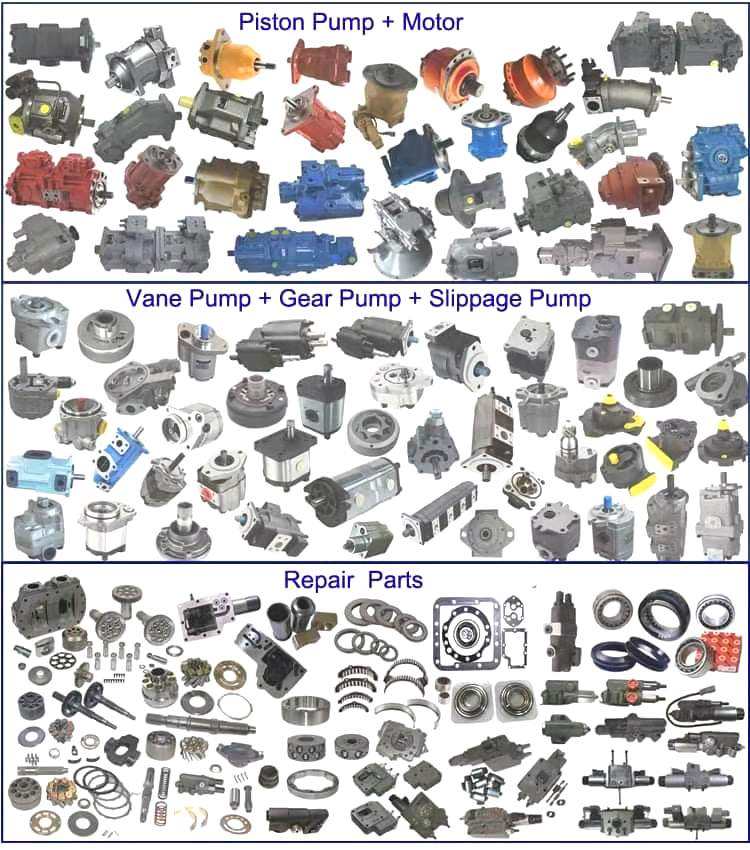
V. Conclusion
Stable hydraulic pump operation relies 70% on standardized installation and 30% on consistent maintenance. Standard installation eliminates inherent defects such as cavitation, vibration and shaft wear from the source. Combining daily inspections with tiered periodic maintenance can greatly extend pump service life and cut downtime maintenance costs. During daily operation, operators shall closely monitor four core indicators: oil condition, noise, temperature and leakage. Early detection and prompt handling of faults reduce costly replacement and repair expenses, ensuring stable and efficient operation of the entire production line.