

-

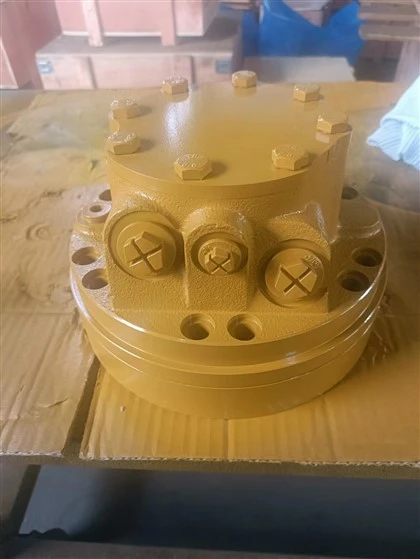
116A-054-BS-0 Hydraulic Orbital Motor 110A 111A 112A 113A...
116A-054-BS-0 Hydraulic Orbital Motor 110A 111A 112A 113A 115A 116A Series High Hydraulic Piston Motor Add to Inquiry -
-
-
-
-
-
-
-
-
-
-


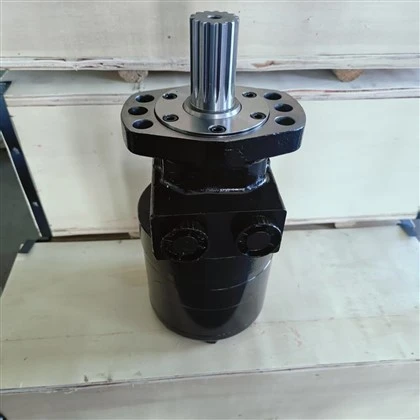

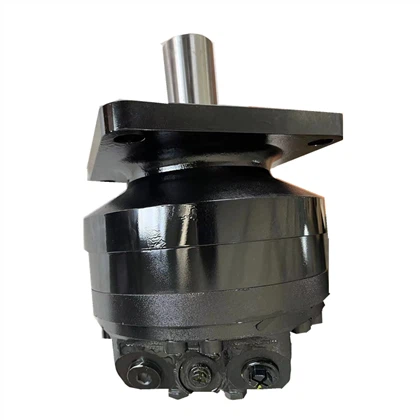
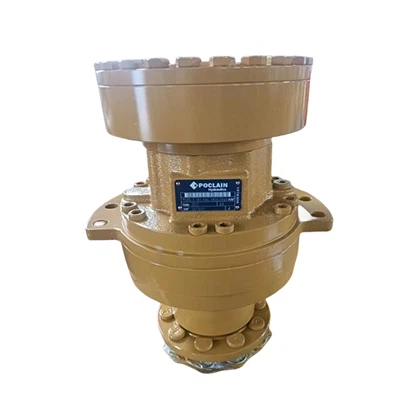
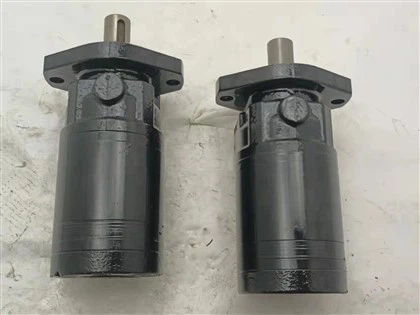


What is a hydraulic motor
A hydraulic motor is an actuator in a hydraulic system that converts hydraulic energy into mechanical energy and is mainly used to drive mechanical equipment that rotates or moves in a straight line.
Hydraulic motors achieve mechanical drive through efficient energy conversion. Their diverse structural designs enable them to adapt to different load and speed requirements, making them one of the core components of modern hydraulic systems.
Basic definition and function
The hydraulic motor is one of the core actuating elements in a hydraulic system, and its function is the opposite of that of the hydraulic pump: converts the pressure energy (pressure and flow) of the liquid provided by the hydraulic pump into the mechanical energy (torque and speed) of the output shaft .
Core Function
By driving the internal components (such as gears, plungers or blades) to move, it drives the load equipment (such as construction machinery, ship thrusters, etc.).
Medium
A liquid (usually hydraulic oil) as a medium for transmitting force and motion.
Working principle
The working process of a hydraulic motor can be divided into the following steps:
High-pressure liquid input
The hydraulic pump delivers high-pressure oil to the oil inlet of the motor.
Energy conversion
The pressure difference of a liquid drives the internal working parts (such as gears, blades or plungers) to rotate or reciprocate.
Mechanical output
Outputs torque and speed through a shaft or drive mechanism to drive external devices.
Application field
Hydraulic motors are widely used in fields that require high power density and controllable power, including:
Industrial equipment
Injection molding machinery, metallurgical machinery.
Construction machinery
Cranes, excavators, coal mining machinery.
Ships and ports
Propulsion systems, port machinery.
Performance parameters
The key parameters are as follows:
Displacement (mL/rev)
Rotational speed (rpm)
Torque (Nm)
Working pressure (MPa)
Efficiency
(volumetric efficiency and
mechanical efficiency)

The Uses Of Hydraulic motors
—— an actuator in a hydraulic system
The hydraulic motor converts the liquid pressure energy provided by the hydraulic pump into mechanical energy (torque and rotational speed) of its output shaft. Liquid is the medium for transmitting force and motion.
From the perspective of energy conversion, hydraulic pumps and hydraulic motors are reversible hydraulic components. By inputting working fluid into any type of hydraulic pump, it can be transformed into the working condition of a hydraulic motor. Conversely, when the main shaft of the hydraulic motor is driven to rotate by an external torque, it can also be changed to the working condition of a hydraulic pump.
Because they have the same basic structural elements - a closed and periodically variable volume and the corresponding oil distribution mechanism. However, due to the different working conditions of hydraulic motors and hydraulic pumps, their performance requirements are also different. Therefore, there are still many differences between hydraulic motors and hydraulic pumps of the same type.
Firstly, the hydraulic motor should be capable of reversing forward and backward, thus requiring its internal structure to be symmetrical. The speed range of the hydraulic motor needs to be large enough, especially with certain requirements for its minimum stable speed. Therefore, it usually adopts rolling bearings or hydrostatic sliding bearings;
Secondly, since the hydraulic motor operates under the condition of input pressure oil, it does not need to have self-priming capability, but it requires a certain initial sealing performance to provide the necessary starting torque.
Due to these differences, hydraulic motors and hydraulic pumps are structurally similar, but they cannot operate reversibly.
The Types of Hydraulic Motors
Hydraulic motors are mainly classified into the following four types: gear motors, vane motors, plunger motors and orbit motors
01
gear motors
It is composed of two or more gears and is driven to rotate by hydraulic oil
02
vane motors
Blades are installed on the rotor and rotate within the stator.
03
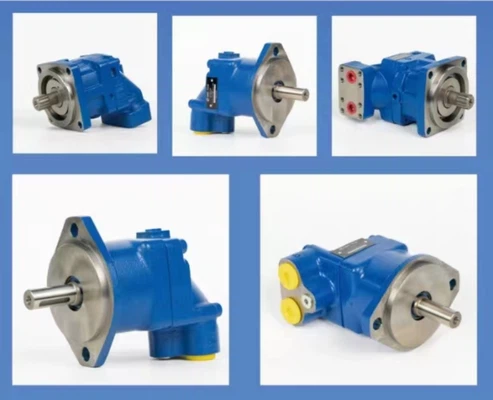
plunger motors
Rotation is achieved through the reciprocating motion of the plunger in the cylinder block.
04
Orbit motors
The Inner Gear Ring Cooperates With The Outer Cycloidal Gear.
Hydraulic piston Motor / Hydraulic plunger Motor
Rotation is achieved through the reciprocating motion of the plunger in the cylinder block
Including axial plunger type and radial plunger type.

01.
Application scenarios
It is widely applied in large-scale construction machinery (such as excavators and cranes), propulsion systems of ships, aerospace and other fields.
In the slewing system of large port cranes, due to the need for large torque and high precision, axial piston hydraulic motors are usually selected
Working principle
The working medium (such as hydraulic oil) acts on the end face of the piston or plunger, causing the piston or plunger to perform linear reciprocating motion. Then, through the motion conversion mechanism (such as swash plate, CAM, crank, etc.), the reciprocating motion of the piston or plunger is converted into the circular motion of the output shaft.
02.
Advantages and disadvantages
Advantages:
- The torque and speed range are wide
- High efficiency
- High precision
Disadvantage:
- Complex structure
- High cost

Hydraulic vane Motor
Blades are installed on the rotor and rotate within the stator

01.
Application scenarios
It is suitable for occasions with high noise requirements and relatively uniform rotational speed, such as the auxiliary rotational motion of machine tools and plastic machinery, etc.
02.
Advantages and disadvantages
Advantages:
- Rotate evenly
- Low noise
- Small in size
Disadvantage:
- The leakage is relatively large.
- The volumetric efficiency is relatively low

Hydraulic gear Motor
It converts the hydraulic energy from the hydraulic pump into mechanical energy for rotary motion, thereby driving the load to work

01.
Application scenarios
It is often used in simple machinery where the accuracy requirements for speed and torque are not high, such as the slewing mechanism of small cranes and fan drives.
Gear hydraulic motors have poor dry sealing performance, relatively low volumetric efficiency, the input oil pressure cannot be too high, and they cannot generate large torque. Moreover, the instantaneous rotational speed and torque vary with the position of the meshing point. Therefore, the gear hydraulic motor is only suitable for high-speed and low-torque applications. It is generally used in construction machinery, agricultural machinery and mechanical equipment with low requirements for torque uniformity.
The gear motor is structurally designed to meet the requirements of forward and reverse rotation. The inlet and outlet oil ports are equal and symmetrical, and there is a separate oil drain port to lead the leaked oil from the bearing part out of the housing. In order to reduce the starting friction torque, rolling bearings are adopted; To reduce torque pulsation, the number of teeth of the gear hydraulic motor is more than that of the pump.
02.
Advantages and disadvantages
Advantages:
- Simple structure
- Low cost
- Small in size
- Light in weight
Disadvantage:
The rotational speed and torque pulsation are relatively large, and the efficiency is relatively low

Hydraulic Orbit Motor
The inner gear ring cooperates with the outer cycloidal gear

01.
Application scenarios
It is widely used in agricultural machinery, small construction machinery, etc.
In some small-scale agricultural irrigation equipment, due to the high requirements for cost and volume, cycloidal hydraulic motors may be a more suitable choice.
It has a simple structure, good low-speed performance and strong short-term overload capacity. Inside a cycloidal motor, there is a stator and a movable blade. The stator, blade and transmission shaft divide the motor into two chambers, each with an oil port. When oil enters one oil port, it exits the other, and the incoming oil pushes the blade to swing.
02.
Advantages and disadvantages
Advantages:
- Small in size
- Light in weight
- Large output torque
Disadvantage:
- Low rotational speed

We're well-known as one of the leading hydraulic motor manufacturers in China. If you're going to wholesale hydraulic motor in stock, welcome to get quotation from our factory. All customized products are with high quality and low price.
